Pickleball Legend Tshirt
First Impressions: Bold, Playful, and Instantly Recognizable
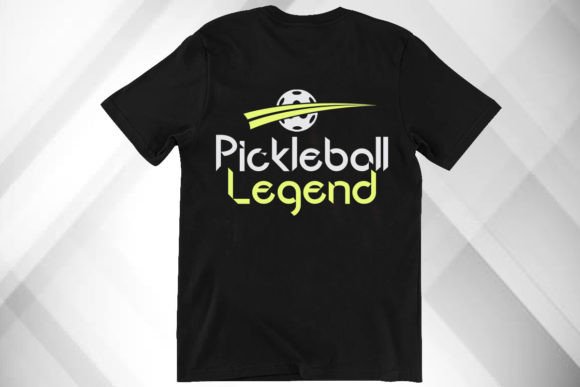
When I opened the Pickleball Legend Tshirt file for the first time, I didn’t see just another sports graphic—I saw a confident, lighthearted statement that lands right between fun and proud. The composition balances clean lettering with a stylized pickleball paddle and ball motif, suggesting movement without clutter. It’s not overly detailed, but it’s not minimalist either—it has enough visual personality to stand out on a sweatshirt cuff or a baby onesie, yet avoids fussy linework that would vanish in dense fill stitch.
A Real-World Test: Embroidering It on a Linen-Cotton Kitchen Towel
Last week, I used the Pickleball Legend Tshirt design for a small-batch order of embroidered kitchen towels for a local pickleball club’s holiday pop-up. We chose natural linen-cotton blend towels—textured, slightly uneven, and unforgiving of low-density stitching. Here’s what happened: the design held up beautifully at 4.5" wide, with satin-stitched outlines defining the paddle shape and bold, open letterforms that stayed legible even with subtle fabric distortion. Customers loved how it looked “designed for embroidery,” not just adapted from a print graphic. That’s rare—and valuable.
Where It Shines (and Where It Needs Extra Care)
The Pickleball Legend Tshirt is strongest on medium-weight, stable fabrics: cotton tees, fleece-lined sweatshirts, canvas tote bags, and twill aprons. Its balanced proportions mean it scales well—from a 3.2" chest logo on a youth cap to a 5.5" back design on an adult hoodie. As a machine embroidery design, it reads clearly in both light and dark thread on contrasting backgrounds, especially when paired with a lightweight cutaway stabilizer.
That said, tread carefully with:
- Stretchy knits—like performance t-shirts or baby bodysuits—unless you use tear-away + topping and reduce stitch density slightly;
- Curved surfaces like structured caps, where the top curve of the paddle shape may distort if hooped too tightly;
- Thin or sheer fabrics (e.g., rayon challis or lightweight voile), where backing show-through could distract from the crispness of the lettering;
- Dense decorative accents—this isn’t an applique design, so avoid layering it over heavy puff or chenille unless you’ve tested stitch build-up first;
- Tiny hoop sizes under 4"—the word “Legend” relies on clean spacing; shrinking it further risks merging letters or losing definition in the ball detail.
What It Adds to Your Finished Product
Using the Pickleball Legend Tshirt doesn’t just add decoration—it adds intention. On a personalized gift (say, a birthday sweatshirt for a longtime player), it feels celebratory, not generic. On boutique merchandise—like a limited-run apron for a pickleball-themed café—it elevates perceived value without shouting. And for Etsy sellers listing a digital embroidery file, this design stands out because it’s built for clarity, not complexity. Buyers notice when letterforms don’t blur, when curves stay smooth, and when the overall balance says “designed by someone who’s stitched before.” That builds trust faster than any description ever could.
Practical Notes Every Embroidery Designer Should Check
Before stitching your first Pickleball Legend Tshirt project, do these five things:
- Test on scrap fabric—especially if using textured, dark, or stretchy material. Watch how the satin stitch wraps the paddle outline and whether the “L” and “G” in “Legend” hold their shape.
- Review thread color contrast—this design works best with high-contrast combos (navy thread on cream, white on charcoal). Avoid mid-tone pairings that mute its energy.
- Check stitch density—if your machine defaults to ultra-dense fills, soften the background fill stitch slightly to prevent puckering on lightweight cotton.
- Confirm hoop size compatibility—while it scales well, verify your standard hoop can accommodate the full layout at your preferred size, especially if adding a border or monogram later.
- Inspect small details in black-and-white mockups—some embroidery software renders fine lines differently. Zoom in. Does the ball retain its roundness? Do the paddle strings read as separate strokes, not a smudge?
Fabric & Context Matters More Than You Think
I’ve seen the Pickleball Legend Tshirt look sharp on a heavyweight organic cotton tote—but flat and indistinct on a loosely woven jute bag. Why? Because embroidery relies on surface tension and fiber grip. The same applies to baby embroidery: on soft interlock knit, it reads sweet and proud; on ribbed cotton, you’ll want extra stabilizer to keep the lettering from “swimming.” For holiday embroidery—like a pickleball-themed ornament or stocking—it’s ideal for a 3" hoop and holds up beautifully in metallic thread, though I’d skip the ball highlight in reflective thread unless testing first.
Commercial Use & Creative Confidence
This isn’t just a T-Shirt Designs graphic repackaged as embroidery—it behaves like a native embroidery file. That matters for craft businesses and Etsy sellers building consistent branding. When customers see the same clean, confident execution across sweatshirt embroidery, embroidered patches, and custom apparel listings, it reinforces professionalism. Just remember: confirm licensing terms before selling finished products or bundling the Pickleball Legend Tshirt into design assets. As a Graphics file, it’s likely print-ready—but commercial embroidery rights aren’t always included by default.
Final Thought: A Design That Works With You, Not Against You
The Pickleball Legend Tshirt won’t ask you to fight your machine, beg your stabilizer, or apologize to your client for messy lettering. It’s got rhythm, readability, and real-world resilience. Whether you’re prepping a batch of personalized gifts, building a small shop product line, or sourcing dependable design assets for your next craft fair, this one earns its place in your working library—not as filler, but as a go-to for joyful, well-executed embroidery projects.