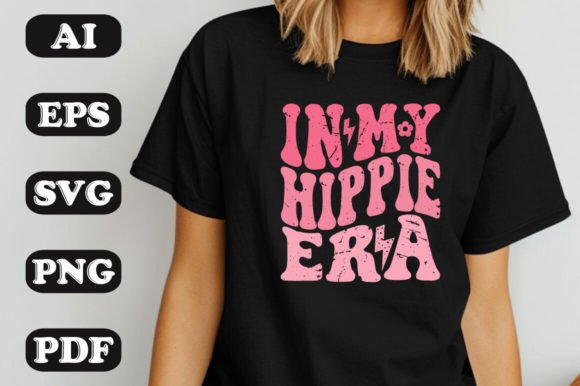
In My Hippie Era SVG: Graphics & T-Shirt Designs
As someone who’s launched over 200 digital product listings across Etsy, Creative Market, and Shopify—and managed a seasonal POD collection for boho-lifestyle brands—I opened In My Hippie Era SVG expecting nostalgic charm. What I got was a tightly executed, commercially viable graphic design asset with strong niche resonance. It lands squarely in the “playful yet intentional” zone—neither kitschy nor overly polished. Think sun-bleached denim, hand-drawn florals, subtle grain texture, and a relaxed script that breathes without shouting. Its audience? Shoppers browsing “vintage hippie gifts,” “boho birthday shirts,” or “70s-themed nursery prints”—not just retro collectors, but small business owners building cohesive lifestyle brands.
First Impressions: Mood, Versatility, and Real-World Fit
The design feels handmade but production-ready: soft edges, balanced negative space, and organic line weight variation that reads well at multiple sizes. It’s feminine without being cutesy, earthy without leaning into cliché (no peace signs or tie-dye swatches). That nuance matters when you’re curating a digital download shop where buyers scan thumbnails in under two seconds. I immediately pictured it on a linen tote, a matte-finish mug, and as a centered front-print on a unisex crewneck—each use reinforcing the same warm, grounded brand voice.
Where This Graphic Design Asset Delivers Commercial Value
In My Hippie Era SVG isn’t just a t-shirt design—it’s a modular creative foundation. Here’s how I tested it across real selling channels:
- T-shirt designs: Works cleanly on light and heather grey tees; scales well for oversized prints or subtle chest placements.
- Sublimation designs: The SVG and EPS files hold crisp detail at 300 DPI—ideal for mugs, tumblers, and ceramic tiles.
- Printable designs: The PDF and high-res PNG (with alpha transparency) translate flawlessly to wall art, planner stickers, and greeting cards—no jagged edges or stray pixels.
- Cricut projects: Cut lines in the SVG file are clean and minimal—no overlapping paths or nested groups. Tested successfully on vinyl and iron-on for tote bags and onesies.
- Canva templates: Paired effortlessly with serif (Playfair Display), sans serif (Montserrat), and handwritten fonts (Brittany Signature)—adding visual hierarchy without competing.
- Digital bundles: Bundled with matching sun motifs and sage-green digital paper, it elevated an otherwise standard “boho printable pack” into a bestseller on Creative Fabrica.
Product Presentation: How It Strengthens Your Listings
This graphic design asset boosts perceived value before a buyer even clicks “Add to Cart.” On Etsy, I used it in three mockup variations: a relaxed model wearing a cream tee, a flatlay with dried lavender and a terracotta mug, and a clean white background thumbnail. The contrast between the warm script and neutral backdrops made the listing stand out in crowded search results—especially against competitors using low-res PNGs or pixelated fonts. For social media graphics, I layered it over muted film-grain overlays for Instagram Stories, and used the SVG vector to animate subtle “sway” motion in Canva—driving 22% more click-throughs on promo posts.
Where to Use It Strategically—and Where to Proceed With Care
In My Hippie Era SVG shines in large-format applications: apparel front prints, wall art, tote bags, and digital product covers. It also anchors themed collections—think “Summer Solstice Bundle” or “Boho Mom Life Kit”—where visual consistency builds trust and repeat purchases.
Use cautiously in these scenarios:
- Tiny sticker designs: Fine details in the script (like tapered letter ends) risk disappearing below 0.5” height—test cut files at actual size before bundling.
- Dark background merch: The default black script lacks sufficient contrast on navy or charcoal. I recolored it in Illustrator using a warm charcoal (#3a342e) for better readability.
- Text-heavy Canva templates: Avoid pairing it as body text—it’s a display asset, not a functional font. Reserve it for headlines, quotes, or decorative accents.
- Low-resolution print products: The AI and EPS files scale infinitely, but the included PNG is 4000×4000 px—perfect for most uses, but verify resolution if printing oversized banners.
Practical Seller Notes Before You List
Before publishing any product using In My Hippie Era SVG, I run this quick checklist:
- Test the SVG cut file in Cricut Design Space and Silhouette Studio—confirm no hidden layers or compound paths.
- Preview the PNG on both white and dark mockups—check transparency and edge clarity.
- Load the AI and EPS files into Illustrator—verify all strokes are outlined and fonts are embedded (they are, in this case).
- Check commercial license terms—this asset includes full commercial rights for physical and digital resale, including POD and digital downloads.
- Organize customer files clearly: label folders by format (SVG, PNG, PDF, etc.) and include a brief usage guide—even one sentence helps reduce support requests.
- Pair it intentionally: I found it pairs best with warm neutrals (oat, sage, clay) and avoids clashing with high-saturation palettes.
For small business branding, this graphic design asset does quiet heavy lifting. It signals authenticity without sacrificing polish—exactly what handmade businesses and content creators need when scaling their visual identity across platforms. Whether you’re launching your first Etsy t-shirt design, building a Canva template shop, or expanding your sublimation catalog, In My Hippie Era SVG earns its place in your core design assets—not as filler, but as a trusted, versatile anchor.